

AI + ERP in Construction The Future of Project Management

AI + ERP in Construction The Future of Project Management
A New Era of Intelligent Construction Management
The construction industry is undergoing a profound transformation driven by Artificial Intelligence (AI) and Enterprise Resource Planning (ERP) systems. Traditional construction project management, often burdened by fragmented data, manual processes, cost overruns, and schedule delays, is rapidly giving way to intelligent, data-driven, and automated ecosystems. By integrating AI with modern ERP platforms, we are redefining how construction projects are planned, executed, monitored, and optimized.
AI-powered ERP solutions are no longer optional enhancements. They are becoming the strategic backbone of future-ready construction organizations, enabling precision, predictability, transparency, and scalability across the entire project lifecycle.
Understanding AI-Driven ERP in Construction
AI-enabled ERP systems integrate centralized enterprise data with advanced technologies, including machine learning, predictive analytics, natural language processing, and automation. In construction, this convergence allows us to move beyond reactive management and adopt proactive, insight-led decision-making.
Unlike conventional ERP platforms, which primarily record transactions, AI-powered construction ERP systems analyze patterns, forecast outcomes, detect risks early, and recommend actions in real-time. This shift transforms ERP from a reporting tool into a strategic intelligence platform.
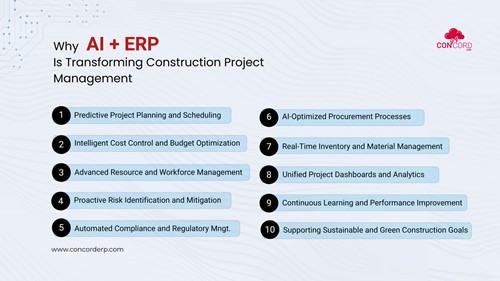
Why AI + ERP Is Transforming Construction Project Management
1. Predictive Project Planning and Scheduling
AI-driven ERP platforms analyze historical project data, workforce productivity, weather patterns, and material availability to generate highly accurate project schedules. Instead of static timelines, we gain dynamic schedules that adapt automatically to real-world conditions.
This predictive capability enables us to:
- Identify schedule risks before they occur
- Optimize resource allocation
- Reduce idle time and bottlenecks
- Improve on-time project delivery
2. Intelligent Cost Control and Budget Optimization
Cost overruns remain one of the most critical challenges in construction. AI-powered ERP systems continuously monitor budgets, expenses, procurement trends, and cash flow patterns to provide real-time financial intelligence.
With AI + ERP, we achieve:
- Early detection of cost deviations
- Automated variance analysis
- Forecasting of final project costs
- Data-backed financial decision-making
This results in greater budget accuracy, improved profitability, and stronger financial governance.
3. Advanced Resource and Workforce Management
Construction projects depend heavily on skilled labor, machinery, and subcontractors. AI-integrated ERP systems evaluate workforce performance, equipment utilization, and productivity metrics to ensure optimal resource deployment.
Key advantages include:
- Smart workforce scheduling
- Predictive labor demand forecasting
- Reduced overtime and labor wastage
- Improved equipment uptime
By aligning human and physical resources intelligently, we enhance overall project efficiency and workforce satisfaction.
AI-Powered Risk Management and Compliance
4. Proactive Risk Identification and Mitigation
AI excels at identifying hidden patterns within complex datasets. When embedded in ERP systems, AI continuously scans project data to flag potential risks related to safety, compliance, cost, and timelines.
This capability allows us to:
- Detect risks at early stages
- Implement preventive actions
- Reduce accidents and rework
- Strengthen compliance adherence
Risk management evolves from reactive issue resolution to continuous risk prevention.
5. Automated Compliance and Regulatory Management
Construction projects are governed by strict regulations, safety standards, and contractual obligations. AI-driven ERP platforms automate compliance tracking, documentation, and reporting, ensuring consistent adherence to regulatory requirements.
This leads to:
- Reduced compliance errors
- Faster audits and approvals
- Improved safety performance
- Enhanced stakeholder confidence
Smart Procurement and Supply Chain Intelligence
6. AI-Optimized Procurement Processes
Procurement inefficiencies can severely disrupt construction projects. AI-powered ERP systems analyze supplier performance, pricing trends, delivery timelines, and demand forecasts to optimize procurement decisions.
Benefits include:
- Smart vendor selection
- Predictive material demand planning
- Reduced material shortages
- Lower procurement costs
By transforming procurement into a strategic, data-driven function, we ensure uninterrupted project execution.
7. Real-Time Inventory and Material Management
AI-enhanced ERP platforms provide real-time visibility into inventory levels, consumption rates, and replenishment needs. This prevents overstocking, material wastage, and last-minute shortages.
As a result, we achieve:
- Lean inventory management
- Improved site logistics
- Reduced storage costs
- Higher material utilization efficiency
Data-Driven Decision Making and Executive Visibility
8. Unified Project Dashboards and Analytics
AI-powered ERP systems deliver centralized dashboards with real-time insights across projects, locations, and departments. Decision-makers gain a holistic view of performance metrics, risks, and opportunities.
Key outcomes include:
- Faster executive decisions
- Improved cross-functional collaboration
- Enhanced accountability
- Strategic project governance
Data silos are eliminated, replaced by a single source of truth.
9. Continuous Learning and Performance Improvement
Machine learning algorithms within ERP systems continuously learn from project outcomes. Each completed project strengthens future predictions, recommendations, and workflows.
This creates:
- Continuous process improvement
- Institutional knowledge retention
- Higher project success rates
- Long-term organizational maturity
The Role of AI + ERP in Sustainable Construction
10. Supporting Sustainable and Green Construction Goals
Sustainability is becoming a strategic priority in construction. AI-driven ERP systems analyze energy usage, material efficiency, waste generation, and carbon impact to support environmentally responsible construction practices.
We gain the ability to:
- Minimize material waste
- Optimize energy consumption
- Track sustainability KPIs
- Align with ESG goals
AI + ERP plays a crucial role in building future-ready, sustainable construction enterprises.
The Future Outlook: Autonomous Construction Management
The future of construction project management lies in autonomous, self-optimizing ERP ecosystems. As AI capabilities advance, ERP systems will evolve to:
- Automatically adjust project plans
- Recommend corrective actions without manual intervention
- Predict market and demand shifts
- Enable fully connected digital construction environments
Organizations that adopt AI-powered ERP today position themselves as industry leaders of tomorrow.
Conclusion
AI + ERP is not just a technological upgrade. It represents a fundamental shift in how construction projects are managed, governed, and delivered. By embracing intelligent ERP platforms, we unlock unparalleled control over costs, schedules, risks, resources, and performance.
The construction companies that invest in AI-driven ERP systems today will define the future standards of efficiency, transparency, and excellence in project management.
 Any questions? Feel free to contact us.